
Build a strong base for your ADU or small home
Your foundation does more than hold up walls. It protects your structure from moisture, movement, and time. In the San Jose Bay Area, soil, seismic activity, and tight lots shape which foundation makes sense for a small home or ADU.
You want a foundation that fits your site, your budget, and your schedule. We help you weigh options with clear pros and cons so you can choose with confidence. Choosing the right option now prevents cracks, uneven floors, and unexpected costs down the road.
Why the right foundation matters to homeowners
The right foundation adds comfort and value to your home. It keeps floors level, doors aligned, and plumbing functioning properly. It controls moisture to protect your finishes and can provide crawlspace access for future repairs or create a low-step entry for easier living.
Your foundation choice affects upfront cost, construction timeline, and long-term flexibility. Some foundations are faster to install, while others offer crawlspace access that makes it easier to update plumbing or electrical systems later. If you’re planning renovations down the road, consider these factors when selecting your foundation type.
Foundation options that work in the Bay Area
Slab-on-grade
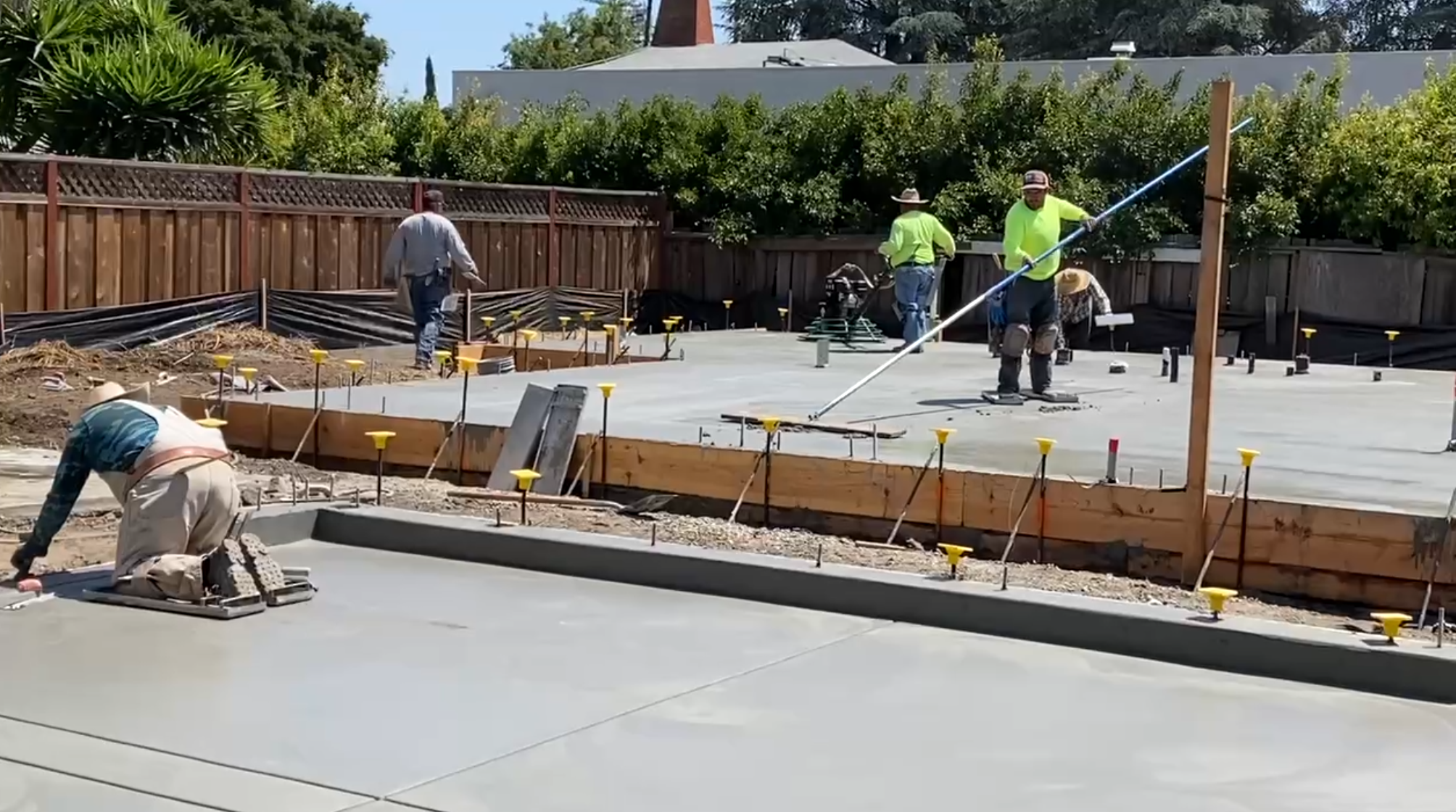
This is a single concrete slab poured on compacted base with footings at the edges. It is common in flat, stable soils and works well for many detached ADUs. It installs quickly and can be cost effective when the site is open.
Pros: Fast schedule, low step at entries, good energy performance with insulation.
Cons: Limited access to plumbing later, careful moisture control needed, not ideal on sloped or poor soils.
Raised perimeter with crawlspace
Also called a stem wall with interior piers. Concrete footings and short walls create a crawlspace under the floor. Floor framing sits above the ground with vents and moisture controls.
Pros: Easy access to pipes and wires later, good for sloped sites, simpler termite and moisture inspection.
Cons: More steps at entries, longer build time, careful ventilation needed.
Pier and grade beam
Concrete piers extend down to stronger soil, tied together by grade beams. The structure bears on these deeper elements. This system helps when surface soils are expansive or weak.
Pros: Handles problem soils, can reduce excavation on tight lots, works with uneven terrain.
Cons: Engineering is required, more inspections, higher cost than standard slab or raised perimeter.
Mat slab (raft)
A thick, reinforced slab that spreads loads over a wider area. It reduces differential settlement on variable soils. It pairs with drainage and vapor controls to manage moisture.
Pros: Excellent for uneven or soft soils, strong against cracking.
Cons: Higher concrete and steel use, needs careful engineering and planning.
Helical piles with grade beams
Steel screw piles are advanced into the ground to engineered depths, then tied with beams. This approach can minimize excavation and vibration, which is helpful on tight or sensitive sites.
Pros: Can work where access is limited, handles poor soils, quick once set up.
Cons: Requires specialized crews and engineering, not always available or cost effective.
Post and pier for light structures
Timber or steel posts on footings support non-habitable structures like decks or small sheds. For living spaces in San Jose, code usually requires engineered concrete systems.
Pros: Simple for light loads.
Cons: Not typical for habitable ADUs without heavy engineering, limited longevity compared to concrete.
How to choose for ADUs and small homes
The context for this list is Best Foundation Type for ADU Builders, based on common Bay Area conditions, schedule, and total cost of ownership.
- 1. Slab-on-grade: Best for flat, stable lots with good drainage. It is fast, cost effective, and energy efficient when detailed well.
- 2. Raised perimeter: Great when you want future access to plumbing or need to manage moderate slopes. It adds flexibility with a moderate schedule impact.
- 3. Pier and grade beam: Strong pick for expansive clays or fill. It handles challenging soils and keeps settlement in check.
- 4. Mat slab: Choose when soils vary widely and you want a robust, uniform base. It is an engineered solution with higher upfront cost.
- 5. Helical piles: Consider for tight access or sensitive sites, subject to engineering and availability.
Use this simple path to decide:
- Confirm site slope and access. Tight lots steer choices toward solutions that reduce excavation.
- Review soil conditions. Ask about expansive clay, fill soil, or liquefaction zones. Get a soil report if you’re unsure.
- Map utilities and plumbing runs. A crawlspace eases future changes. A slab demands careful layout now.
- Balance budget and schedule. Slabs can be quick. Engineered systems add design time and inspections.
- Think lifetime. Energy performance, moisture control, and service access all pay off long term.
San Jose reality check: codes, soils, and permits
San Jose follows California codes with seismic design expectations. That means rebar, anchor bolts, straps, and proper hold-downs. Detailing is as important as the foundation type. We design and build ADUs that meet code and pass inspection at every phase of ADU construction.
Many Bay Area neighborhoods sit on clay that swells and shrinks with moisture. Good drainage, proper base rock, and vapor barriers under slabs are critical. In some areas, deeper piers or a mat slab control movement and protect finishes.
Permits matter. Plan check may ask for soils information, structural calculations, and site drainage. We handle submittals, coordinate inspections, and keep you informed. Our No Surprises Policy means you understand each step before we pour.
Common mistakes and helpful pro tips
Skipping a soil analysis
Mistake: Pouring a standard slab on unknown fill or expansive clay.
Result: Cracking or uneven floors over time.
Tip: Ask for at least a basic soils review when history is unclear. For additions or ADUs, tie new work to known conditions or improve the base.
Ignoring drainage
Mistake: Flat grades and downspouts that dump near the foundation.
Tip: Aim water away with swales, drains, and gutter extensions. Consider a French drain where runoff concentrates.
Underestimating utilities
Mistake: Slab placement before confirming sewer depth and slope.
Tip: Finalize plumbing routes early. For complex layouts, a crawlspace can save time and money if changes are likely during home additions.
Choosing the cheapest concrete
Mistake: Cutting rebar or fiber reinforcement to save cost.
Tip: Follow engineering and local best practices. Proper reinforcement and curing reduce cracking and boost lifespan.
Forgetting site access
Mistake: Selecting a mat slab or heavy pier system without considering machine access.
Tip: On tight lots, plan for smaller equipment, handwork, or alternatives like helical piles when feasible.
Missing the moisture details
Mistake: Skipping vapor barriers or slab insulation.
Tip: Add a quality vapor barrier, seal penetrations, and consider rigid insulation to reduce condensation and improve comfort during home remodeling.
Cost, timeline, and long term value
Budget: For a typical Bay Area ADU, total project cost commonly ranges from 100K to 300K plus. The foundation is a meaningful piece. Depending on type and soil, it often represents 10 to 20 percent of the total. Engineering, inspections, and drainage add to that but protect your investment.
Timeline: Many foundations build in 2 to 5 weeks, including excavation, forms, steel, inspections, and curing. Project-wide, ADUs usually complete in 4 to 8 months. Kitchens run 4 to 12 weeks, and bathrooms 2 to 6 weeks, but your site and scope set the pace.
Value: A well designed foundation lowers repair risk and increases comfort. Slabs can be efficient and fast. Raised perimeters offer access and flexibility. Engineered systems support difficult soils and keep finishes stable. Shortcuts cost more later. Evergreen choices save you stress.
Ways to stay on budget:
- Pick a foundation that matches your soil, not the cheapest up front.
- Resolve plumbing and drainage early to avoid change orders.
- Keep access clear so crews can work efficiently.
- Plan finishes that work with your foundation type, like low curb showers on slabs or easy trap access in crawlspaces.
Final takeaways and next steps
You want a foundation that stands the test of time. Start with your site, your goals, and your budget. Slab-on-grade suits many flat lots. Raised perimeter helps when you want access and flexibility. Engineered systems shine on variable soils. We guide you through choices and keep you informed at every step.
We are licensed, bonded, and insured. CA Lic #955200. Our crews are respectful, our budgets are clear, and our delivery is on time. If you are planning an ADU or small home in San Jose, reach out to contact us for a friendly, no pressure conversation.
Want a broader view of how all pieces fit together, from design to finishes and permits to inspections? Explore our approach to full home and ADU work so your project moves smoothly from start to finish.


